
Turning News into Notes for UPSC and Beyond – with Jaiprakash Rau
Great Nicobar Project — Comprehensive Analytical Notes for UPSC
1. Introduction
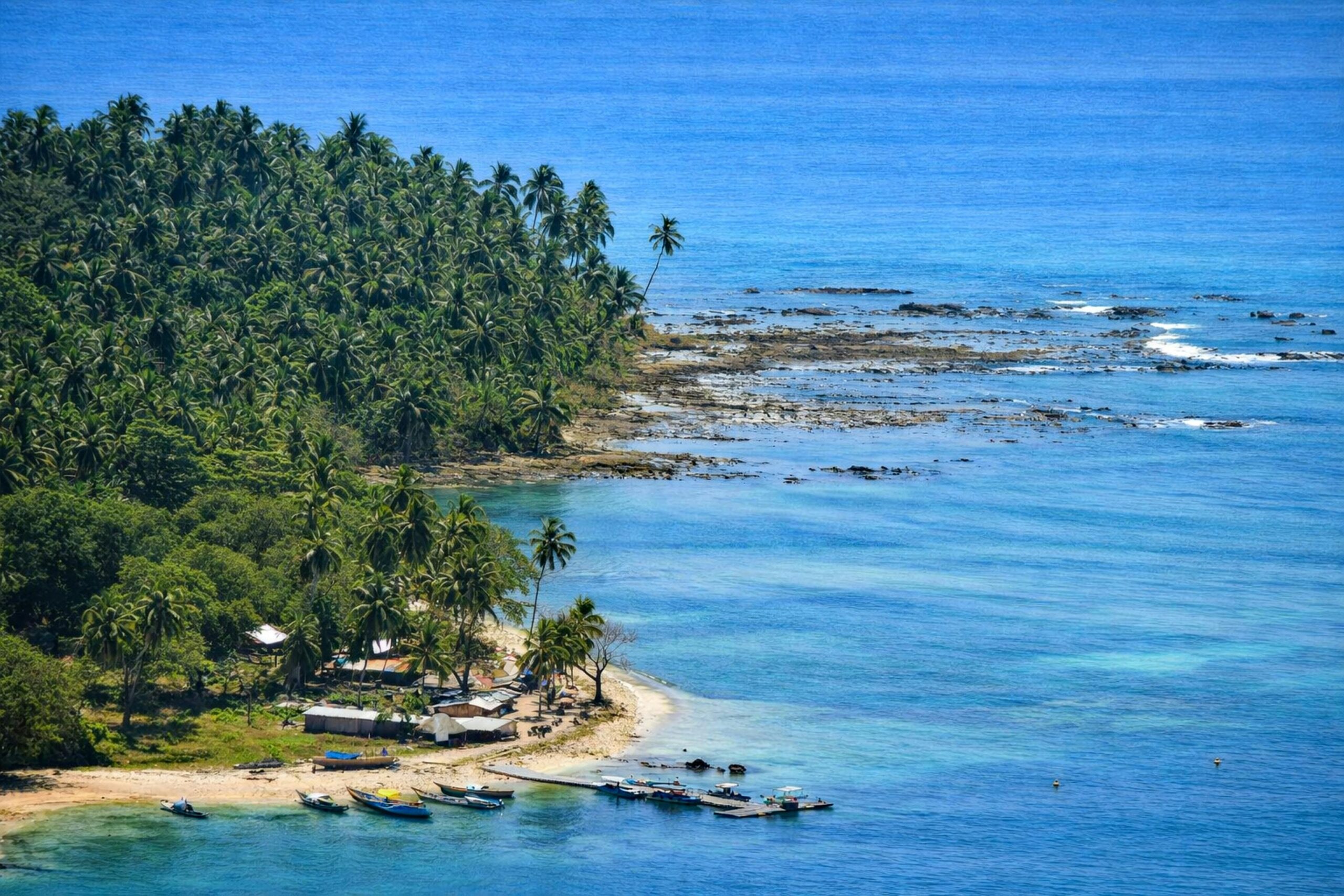
The Great Nicobar Project (GNP) is a mega infrastructure initiative aimed at transforming Great Nicobar Island into a strategic, economic, and maritime hub in the eastern Indian Ocean.
Key Components:
International Transshipment Port (Galathea Bay)
Greenfield International Airport
Integrated Township
Power Plant (Gas + Renewable mix)
Road Connectivity
Core Objective:
Leverage proximity to the Malacca Strait to enhance India’s strategic and economic footprint.
2. Strategic & Geopolitical Significance
2.1 Location Advantage
Near Six Degree Channel & Malacca Strait
~40% of global trade passes through this region
Critical for energy flows & supply chains
Implication:
India gains geostrategic leverage over global maritime trade
2.2 Indo-Pacific Strategy
Strengthens India’s role in Indo-Pacific geopolitics
Supports:
Maritime Domain Awareness (MDA)
Naval logistics
Surveillance capabilities
2.3 Countering China
Response to String of Pearls strategy
Enhances India’s capacity to:
Monitor Chinese naval activity
Act as a net security provider in IOR
2.4 Transshipment Advantage
Reduces dependence on:
Colombo
Singapore
Boosts India’s logistics competitiveness
3. Economic & Developmental Potential
3.1 Blue Economy Push
Shipping, logistics, port-led development
Potential maritime hub
3.2 Infrastructure & Employment
Jobs in construction, logistics, services
Improved connectivity in remote region
3.3 Strategic Economy
Strengthens:
Supply chain resilience
Act East Policy
Sagarmala Programme
4. Environmental Concerns
4.1 Biodiversity Loss
UNESCO Biosphere Reserve
Threat to:
Leatherback Turtle nesting (Galathea Bay)
Nicobar Megapode
Endemic species
Risk: Deforestation (~130–150 sq km)
4.2 Marine Ecosystem Damage
Dredging → Coral reef destruction
Disruption of fish breeding zones
Coastal erosion risks
4.3 Disaster Vulnerability
Located in Seismic Zone V
2004 Tsunami impact
Concern: Infrastructure may amplify disaster risks
5. Tribal & Ethical Dimensions
Communities:
Shompen (PVTG) ( Particularly Vulnerable Tribal Group)
Nicobarese
Key Issues:
Displacement
Cultural erosion
Livelihood disruption
Legal Angle:
Forest Rights Act (FRA)
Consent of Gram Sabha
Ethical dilemma:
Development vs Indigenous survival
6. Legal & Governance Issues
6.1 Environmental Clearances
Concerns over:
Fast-tracked EIA
Inadequate ecological assessment
6.2 Judicial Scrutiny
Issues flagged by courts:
Biodiversity protection
Disaster risk underestimation
6.3 FRA Compliance
Questionable tribal consent
7. Climate Change Dimension
7.1 Sea-Level Rise
Island already vulnerable
Port infrastructure at risk
7.2 Carbon Footprint
Deforestation → reduced carbon sink
Gas plant → emissions concern
8. Balancing Development & Conservation
Key Recommendations:
Ecologically sensitive zoning
Protect critical habitats (e.g., turtle nesting sites)
Limit township expansion
Strengthen tribal participation
Independent environmental audits
Climate-resilient infrastructure
9. ADVANCED GEOPOLITICAL DIMENSION
9.1 Malacca Strait: Global Chokepoint Politics
Connects Indian Ocean → Pacific Ocean
Carries:
~40% global trade
Major oil shipments
Strategic Insight:
Control/monitoring = leverage over global economy
9.2 China’s “Malacca Dilemma”
Term linked to Hu Jintao
~80% of China’s oil imports pass through Malacca
Vulnerability:
Blockade risk by India/US
Role of Great Nicobar:
Acts as a strategic observation node
Enhances India’s deterrence capability
9.3 China’s Diversification Strategy
Alternative Routes:
China–Myanmar Corridor (Kyaukpyu Port → Yunnan)
CPEC (Gwadar Port)
Proposed Kra Canal
Limitation:
None can fully replace Malacca
Conclusion:
Malacca remains irreplaceable chokepoint
9.4 Expansion of Chinese Naval Presence
PLA Navy activities:
Submarine deployments
Survey vessels
Anti-piracy missions (strategic shift)
Concern:
Seabed mapping → submarine warfare advantage
9.5 From “String of Pearls” → Military Logistics Network
Evolution from symbolic ports to operational bases:
Hambantota
Gwadar
Djibouti
Implication:
China building sustained IOR presence
9.6 Undersea Cable & Data Geopolitics
Malacca = digital chokepoint
Carries submarine internet cables
Strategic shift:
Control over data flows = cyber power
9.7 Grey Zone Warfare
China’s tactics:
Maritime militia
Survey ships
“Scientific missions”
Nature:
Below-threshold conflict
Relevance for India:
Great Nicobar boosts monitoring & response capability
9.8 Role of Quad
Focus:
Maritime Domain Awareness
Secure sea lanes
Free & Open Indo-Pacific
GNP’s ( Great Nicobar Project) Role:
Integrates into multilateral surveillance architecture
9.9 India’s Strategic Response
Act East Policy
Sagarmala
Naval exercises (e.g., Malabar)
GNP strengthens:
Forward presence
Logistics
Surveillance
9.10 Emerging Strategic Risks
Militarisation of Indian Ocean
India–China naval rivalry
Spillover from South China Sea/Taiwan tensions
Submarine warfare escalation
10. High-Value Analytical Conclusion
The Great Nicobar Project is not merely an infrastructure initiative but a multi-dimensional strategic pivot combining:
Geopolitics (Malacca leverage)
Economics (Blue economy)
Security (Indo-Pacific strategy)
Ethics (tribal rights)
Ecology (fragile ecosystems)
Core Insight for UPSC:
It represents India’s attempt to convert geography into strategic advantage, while facing the classic challenge of balancing development, security, and sustainability.
11. Ready-to-Use UPSC Value Additions
GS1:
Tribal rights, island societies
GS2:
FRA, environmental governance, judicial role
GS3:
Blue economy
Disaster vulnerability
Indo-Pacific geopolitics
Essay Themes:
“Geography as destiny”
“Development vs Environment”
“Strategic autonomy in a multipolar world”
Analytical Conclusion
The Great Nicobar Project represents a decisive moment in India’s attempt to translate its unique geography into enduring strategic advantage in the Indo-Pacific. Located close to the critical maritime artery of the Malacca Strait, the project positions India to influence not just regional security dynamics but also global trade and energy flows. In an era marked by intensifying competition, particularly with China’s expanding maritime footprint and its well-documented “Malacca Dilemma,” the project enhances India’s capacity for surveillance, deterrence, and logistical reach across the Indian Ocean Region. At the same time, it aligns with broader strategic frameworks such as the Quadrilateral Security Dialogue and reinforces India’s aspiration to act as a net security provider, while reducing dependence on foreign transshipment hubs and strengthening supply chain resilience.
However, the project also exposes a deep structural tension between strategic imperatives and ecological as well as ethical responsibilities. Great Nicobar is not an empty strategic space but a fragile ecological hotspot and home to vulnerable indigenous communities. Large-scale deforestation, threats to endemic biodiversity, and risks to critical habitats such as leatherback turtle nesting sites raise serious concerns about irreversible environmental damage. Simultaneously, questions surrounding compliance with laws like the Forest Rights Act, 2006 and the adequacy of environmental impact assessments highlight governance deficits and the potential marginalisation of Particularly Vulnerable Tribal Groups. When compounded with the island’s high seismic vulnerability and exposure to climate change-induced sea-level rise, the long-term sustainability of such mega-infrastructure becomes even more uncertain.
Thus, the Great Nicobar Project ultimately embodies the classic developmental paradox of the 21st century: how to reconcile national security, economic growth, and environmental sustainability within a single policy framework. Its success will not be judged merely by infrastructure creation or strategic signalling, but by the extent to which India can adopt a calibrated, phased, and ecologically sensitive approach that integrates climate resilience, respects indigenous rights, and ensures institutional transparency. In essence, it is a test case of whether India can pursue great-power ambitions without compromising its commitment to sustainable and inclusive development—turning geography into destiny, but without undermining the very ecological and social foundations that sustain it.