

Turning News into Notes for UPSC and Beyond – with Jaiprakash Rau
1. Conceptual Foundation: From Tech Sovereignty to Compute Sovereignty
Technological sovereignty refers to a nation’s ability to design, produce and control critical technologies.
Compute Triad Framework
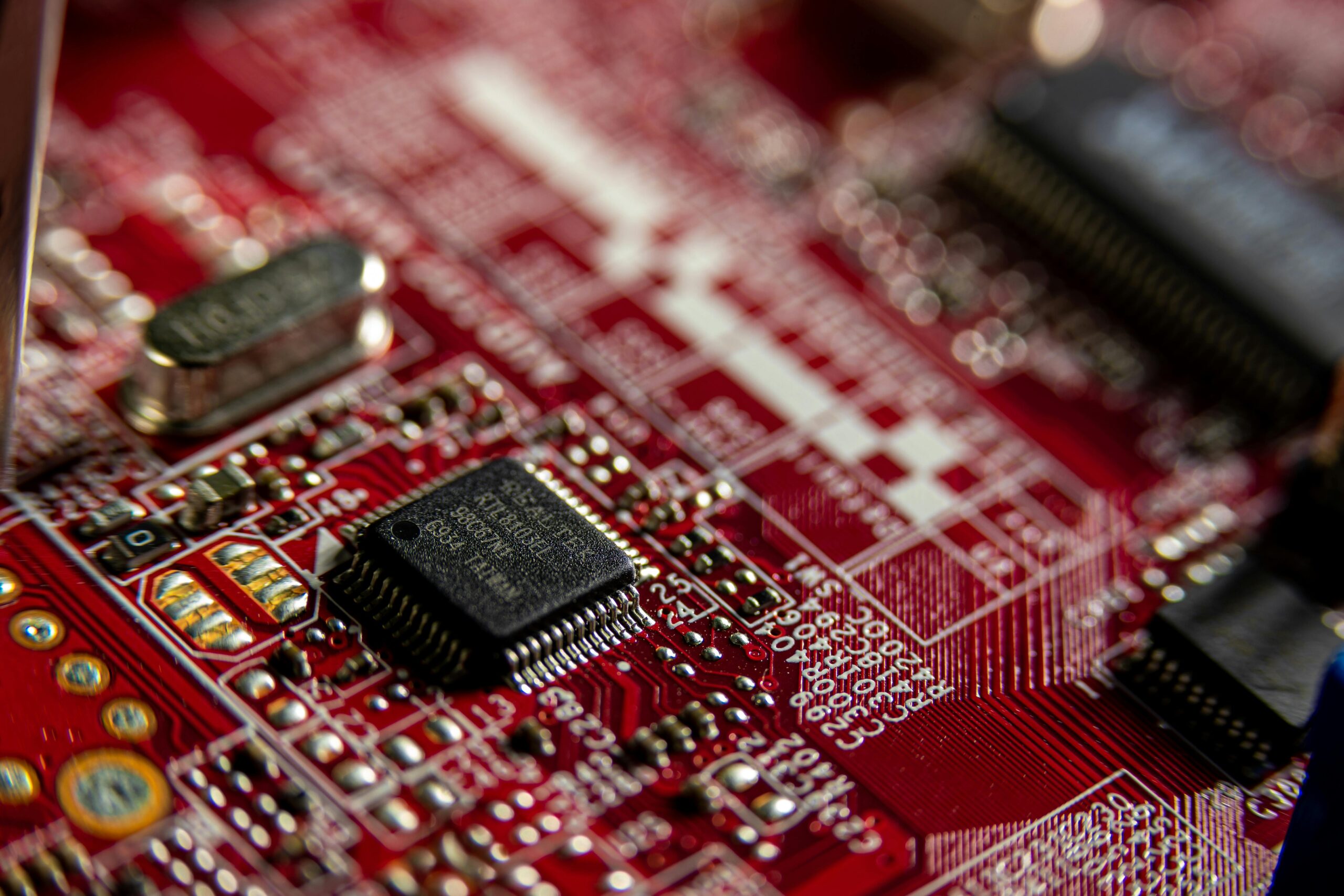
Hardware (Engine): Advanced semiconductors (GPUs, TPUs)
Data (Fuel): Large-scale, high-quality datasets
Talent (Driver): Skilled human capital
Insight: Power emerges only when all three interact. A deficit in any one pillar constrains technological dominance.
Advanced Keyword:
Compute Sovereignty → Ability to process and control data on domestic infrastructure
2. Semiconductors: The Strategic Core
(A) Why Semiconductors Matter
Backbone of all modern systems: defence, telecom, AI
“Fuel of the digital economy”
(B) Global Concentration & Technical Chokepoints
Manufacturing concentrated in Taiwan, South Korea
Design/IP dominated by USA
Critical Addition (Integrated):
EUV Lithography chokepoint:
Only one company globally (ASML, Netherlands) produces machines required for sub-7nm chips
→ Creates entry barriers and strategic dependency
UPSC Insight: Control lies not just in production, but in tools of production
(C) Economic Reshaping
High-value capture in design + IP
Supply shocks (e.g., chip shortage) disrupt global industries
(D) Security Dimension: From Warfare to Grey Zone Conflict
Earlier focus: missiles, cyber tools
Now expand to:
Economic Coercion: Export bans on chips to influence policy
Supply Chain Integrity Risk: Hardware trojans/backdoors in imported chips
Strategic Vulnerability: Taiwan Strait tensions
Shift: From direct warfare → “Grey Zone Warfare”
3. Artificial Intelligence: The Power Multiplier
(A) Economic Transformation
Productivity + automation
Winner-takes-all markets
(B) Labour & Inequality
Skill polarization
Job displacement vs creation paradox
(C) Security & Political Power Expansion
Autonomous weapons → Algorithmic warfare
Intelligence + surveillance
Cognitive Warfare: AI-driven disinformation, deepfakes
Internal security threat: Erosion of social trust
(D) Data + Governance Challenge
Data is strategic resource
AI influences elections, governance
Critical Addition:
“Black Box Problem”
→ Lack of explainability in AI decisions
→ Challenge for judiciary, accountability, and governance
The “Black Box Problem” refers to the lack of transparency in complex AI systems, specifically deep learning models, where the internal reasoning behind an output cannot be easily understood or explained by humans. As AI is increasingly integrated into high-stakes decision-making, this opacity transforms from a technical hurdle into a significant challenge for judiciary processes, accountability, and governance.
By 2026, as regulations like the EU AI Act come into full force, the need for explainable AI (XAI) is a critical compliance and ethical priority.
(E) Environmental Constraint
AI is energy-intensive
Data centres require massive electricity + water cooling
Emerging constraint: Energy becomes a hidden geopolitical variable
4. Interlinkage: Chips + AI = Feedback Loop
AI depends on advanced chips
AI improves chip design
Self-reinforcing cycle:
Better chips → Better AI → Better chips
5. Global Power Transformation
(A) Resource Power → Tech Power
Oil → Data + Algorithms + Chips
(B) Emergence of Tech Blocs
US Model → Open, innovation-driven
China Model → State-driven, surveillance-oriented
(C) Regulatory Paradigms (New Structured Addition)
Model Core Philosophy
EU Rights-centric (privacy, AI Act, risk classification)
USA Innovation-centric (market-led, flexible regulation)
China State-centric (control + surveillance)
India Balancing inclusion + growth (“AI for All”)
Analytical Concept:
AI Trilemma → Safety vs Innovation vs Accessibility
(D) Weaponization of Interdependence
Export controls
Sanctions
Supply chain leverage
Keyword: Silicon Diplomacy
6. India’s Position: From Dependence to Strategic Bridging
(A) Strengths
IT ecosystem
Talent pool
Data advantage
(B) Structural Weakness
~90% chip import dependence
Weak fabrication ecosystem
(C) Refined Strategic Understanding
Design vs Fabrication Divide:
India strong in chip design (~20% global talent)
Weak in fabrication
(D) Strategic Pathway (Enhanced)
India Semiconductor Mission + PLI
India AI Mission
iCET partnership with USA
Trusted supply chains
India as a “Digital Bridge” → Between Global North (technology) and Global South (data)
Best Interview Line:
India should pursue strategic autonomy without technological isolation
7. Advanced Analytical Themes
Tech Nationalism vs Globalization
Innovation vs Regulation
Security vs Openness
Inequality (global + domestic)
8. Value Addition Keywords
Tech Sovereignty
Compute Sovereignty
Chokepoint Technologies
Algorithmic Governance
Weaponized Interdependence
Silicon Diplomacy
AI Trilemma
9. Analytical Conclusion
Control over semiconductors and AI marks a shift from territorial geopolitics to technological geopolitics.
Power today lies in:
Controlling computation
Shaping information flows
Influencing decision-making systems
However, concentration of this power creates risks:
Digital authoritarianism
Global inequality
Strategic instability
The future global order will depend on managing three balances:
Innovation vs Ethics
Competition vs Cooperation
Sovereignty vs Interdependence
For India, the optimal path lies in:
Building domestic capability
Leveraging strategic partnerships
Positioning itself as a bridge power in the digital world order
Analytical Conclusion
The rise of semiconductors and artificial intelligence marks a decisive transition from a world shaped by territorial control and natural resources to one governed by technological capabilities and computational power. Unlike earlier eras where oil or geography defined strategic advantage, today’s power structure is anchored in the ability to design advanced chips, harness vast datasets, and deploy intelligent algorithms—captured in the idea of compute sovereignty. This transformation is not merely economic; it is deeply geopolitical, as control over chokepoint technologies and digital ecosystems enables states to exercise influence through supply chains, standards, and even cognitive domains via information manipulation. At the same time, the fusion of chips and AI creates a self-reinforcing cycle of innovation that risks concentrating power within a few countries and corporations, thereby exacerbating global inequalities and fostering new forms of digital authoritarianism. The emerging landscape is further complicated by competing regulatory models, the weaponization of interdependence, and constraints such as energy intensity and ethical governance challenges like the “black box” problem. In this context, the future global order will hinge on how effectively nations balance innovation with accountability, national security with openness, and competition with cooperation. For India, the strategic imperative lies in navigating a calibrated middle path—leveraging its strengths in talent and data, strengthening domestic capabilities in design and manufacturing, and engaging in partnerships such as trusted supply chains—so as to achieve strategic autonomy without isolation while positioning itself as a pivotal bridge in an increasingly fragmented technological world.