
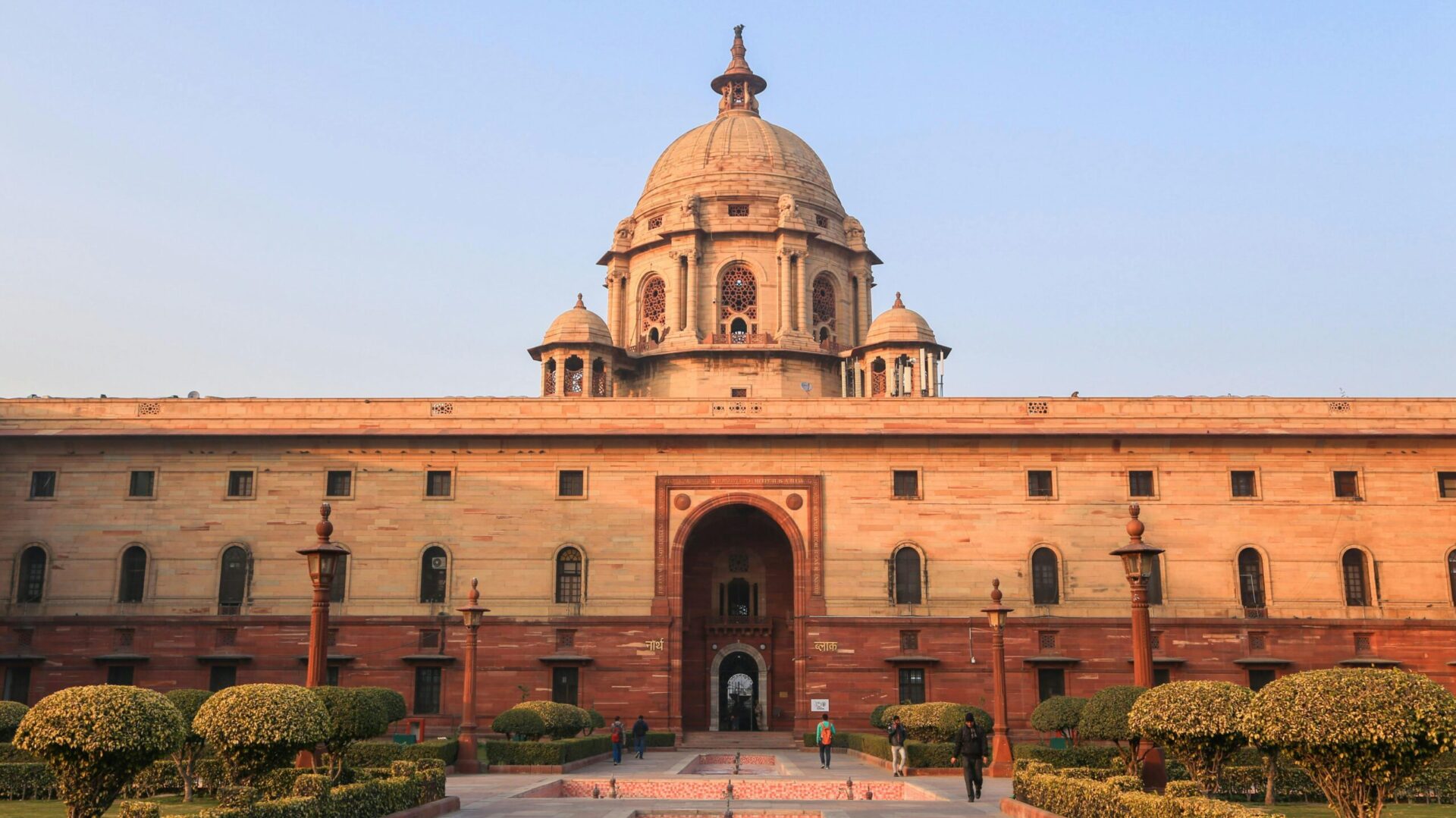

Important Topics written by Senior IRS Shri Jaiprakash Rau (Retd) and Anshu Sharma (Senior UPSC Sociology Faculty)
If one studies UPSC’s pattern seriously, a clear reality emerges: UPSC is not “random”; it repeatedly tests the same core themes through new current-affairs angles. The Prelims GS Question paper increasingly rewards conceptual clarity + issue linkage rather than rote facts. PYQ analyses and recent discussion trends strongly converge on this.
The Big 3 — UPSC’s Permanent Obsession
Nearly 55–60% of the paper repeatedly comes from:
- Polity & Governance 2. Economy 3. Environment & Ecology
And among current-affairs-linked questions, these three alone contribute close to 75%.
Highest Probability Themes for UPSC Prelims GS - Indian Polity & Governance
Political Science (Extremely probable areas)
Parliament procedures
Fundamental Rights vs DPSP vs Duties
Constitutional bodies
Election-related institutions
Federalism & Centre–State relations
Judiciary & judicial review
Anti-defection
Emergency provisions
Constitutional amendments in news
Governor–President discretionary powers
Why UPSC likes them ?
These allow UPSC to frame:
conceptual statements, constitutional traps, application-based questions.
Particularly hot for current cycle
Electoral reforms
Simultaneous elections debate
Digital data/privacy governance
CEC appointment issues
Parliamentary ethics/procedure
Local government devolution
- Environment & Ecology
Environmental Studies 9This remains UPSC’s favourite surprise weapon).
Most probable areas
Biodiversity hotspots
Ramsar sites
National parks & biosphere reserves
Species in news
IUCN categories
Climate agreements
Carbon markets
Renewable energy transition
Planetary boundaries
Wetlands and mangroves
Marine biodiversity
UPSC mindset
UPSC now asks: > “location + species + convention + concept” in one question.
Very high probability current themes
Green hydrogen
Sustainable Aviation Fuel (SAF)
Climate finance
Carbon credits
Net-zero frameworks
Lithium/cobalt/critical minerals
Biofuels alliance
- Economy
Economics (UPSC no longer asks pure textbook economy).
Most probable areas
Inflation concepts
Monetary policy tools
Banking system
Financial inclusion
Digital payments & UPI
CBDC
Fiscal deficit
External sector
Capital markets
International financial institutions
Energy economy
Very probable issue-linkages
AI economy, Semiconductor mission, Manufacturing incentives (PLI Schemes), Power sector reforms, Green economy, Employment quality, Supply-chain resilience
UPSC’s favourite trap
Statement-based conceptual distinction: repo vs reverse repo, capital vs revenue expenditure, current account vs capital account etc. - Science & Technology (UPSC asks “application-oriented” science, not engineering depth).
Most probable areas
Artificial Intelligence
Quantum technology
Semiconductor ecosystem
Biotechnology
Gene editing
Space missions
Cybersecurity
Green tech
Energy systems
Rare earths & critical minerals
Very likely themes
IndiaAI Mission
AI ethics/governance
Quantum Mission
ISRO applications
Microgravity research
Hydrogen economy
- International Relations & Groupings
International Relations (UPSC increasingly asks IR through):
organizations, corridors, initiatives, strategic geography.
Most probable areas
BRICS,QUAD, BIMSTEC,SCO NATO basics IMEC corridor ,INSTC, Indo-Pacific, G20 legacy outcomes, African Union in G20
UPSC pattern
Questions often combine: map + organization + purpose. - Geography (Selective, Not Random)
Focus areas
Ocean currents
Climatic phenomena
Mineral geography
Mapping
Agriculture geography
Critical minerals
Energy geography
River systems
Highly probable Arctic routes, El Niño/La Niña, Rare earth locations, Strategic chokepoints, Andaman and Nicobar
- Modern History & Art & Culture (UPSC reduced pure factual history but still asks):
reform movements,
constitutional evolution,
Gandhian phases,
Buddhism/Jainism,
temple architecture,
manuscripts,
GI tags and heritage.
High-return areas
Acts from 1773–1947
Tribal movements
Revolutionary organizations
Constitutional developments
Now, If I Had to Prioritize ONLY 25 High-Yield Micro Topics
These are statistically and pattern-wise extremely important:
- Parliament
- Fundamental Rights
- DPSP
- Constitutional Bodies
- Election Commission
- Federalism
- Monetary Policy
- Banking & Financial Inclusion
- Inflation
- International Financial Institutions
- Biodiversity
- Protected Areas
- Species in News
- Climate Agreements
- Carbon Markets
- Energy Transition
- AI & Governance
- Semiconductor Mission
- Space Applications
- International Organizations
- Strategic Corridors
- Oceanography
- Agriculture & Food Security
- Critical Minerals
- Modern Constitutional History
What UPSC Is MOST Likely Testing Now The emerging UPSC mindset appears to be:
“Can the candidate connect governance, technology, environment, economy and global systems together?”
So expect: interdisciplinary questions, assertion-reason style traps, conceptual elimination-based MCQs, current affairs wrapped around static core.
The era of memorizing 10,000 facts is fading.
The era of “deep understanding of recurring themes” is clearly dominant.
Disclaimer: This is purely my advice and only advice, make your own discretion. I do not accept any guarantee for the above advice. This is done only to share my numerous trysts with UPSC. Exercise enough caution while accepting or rejecting the above-mentioned topics for the ensuing prelims.