

Article is written by Anshu Sharma
European Union Founded, November 1, 1993
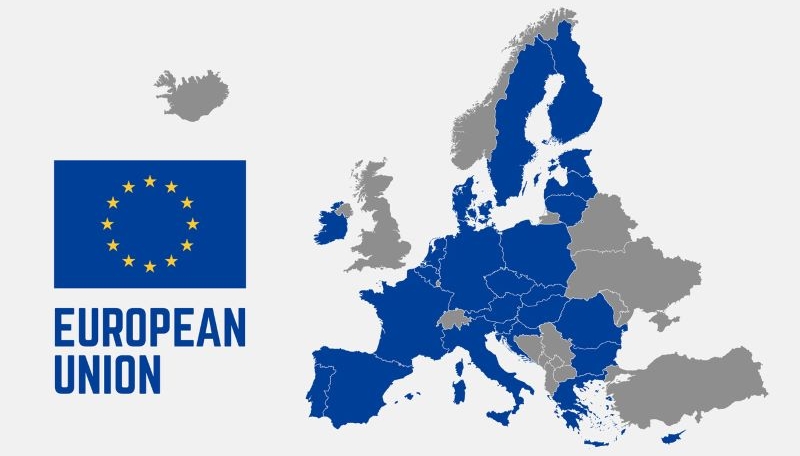
The European Union (EU) is a unique political and economic union of 27 member states, primarily located in Europe, with a combined population of over 450 million.
It operates an internal single market, allowing the free movement of goods, services, capital, and people across member borders.
Key Facts & Figures
- Member States: 27 countries
- Combined Population: ~450 million people
- GDP: Over €18 trillion, representing roughly one-sixth of the global economic output
Core Benefits & Functions
- The Euro (€): The single currency used by 20 of the 27 EU countries, forming the Eurozone.
- Schengen Area: A border-free travel zone that allows citizens to move freely between member countries without passport controls.
- Single Market: A standardized system of laws that ensures goods and services face no tariffs or non-tariff barriers, promoting cross-border trade.
Main Institutions
The EU is governed by several central institutions, which balance both supranational interests and individual member state governments:
- European Parliament: Elected directly by EU citizens, it passes laws and debates policy.
- European Council: Composed of the heads of state or government of the member states, it defines the EU’s overall political direction.
- Council of the European Union: Represents the individual member state governments.
- European Commission: The executive body that proposes legislation and enforces EU rules.
Member States
The current 27 member nations include: Austria, Belgium, Bulgaria, Croatia, Cyprus, Czechia, Denmark, Estonia, Finland, France, Germany, Greece, Hungary, Ireland, Italy, Latvia, Lithuania, Luxembourg, Malta, Netherlands, Poland, Portugal, Romania, Slovakia, Slovenia, Spain, and Sweden.
The United Kingdom is the only country to have officially left the bloc (Brexit)