
For the UPSC exam, stupas are primarily tested based on their evolution, architectural components, patron dynasties, and locations. Memorize the major stupas chronologically, as mapping them to their respective eras is a recurring theme in the Art and Culture syllabus.
Chronological List of Major Stupas
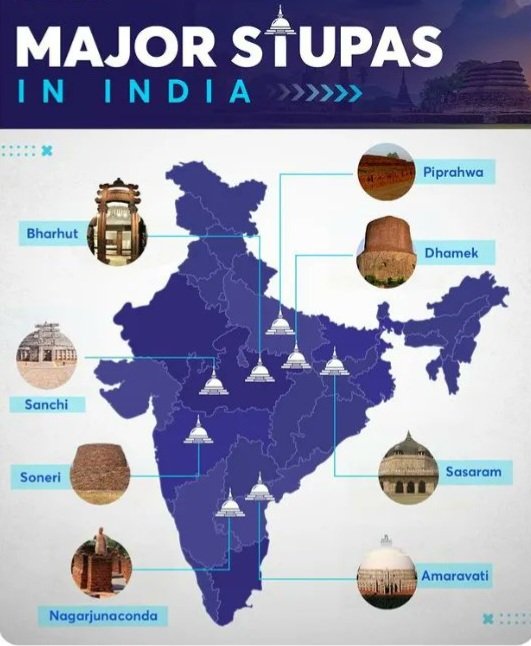
- Piprahwa Stupa (Uttar Pradesh): Commissioned during the Mauryan period, it is considered the oldest surviving stupa in India.
- Sanchi Stupas (Madhya Pradesh): Originally commissioned by Emperor Ashoka (Mauryan). The Great Stupa (Stupa No. 1) is the most famous, later expanded by the Sungas and Satavahanas (toranas added).
- Bharhut Stupa (Madhya Pradesh): Dates back to the Sunga dynasty. Known for its exquisite red sandstone sculptures and railings.
- Dhamekh Stupa (Sarnath, Uttar Pradesh): Believed to mark the exact spot where the Buddha gave his first sermon to his five disciples.
- Amaravati Stupa (Andhra Pradesh): Built under the Satavahanas (2nd century BCE to 2nd century CE). Famous for white marble and narrative reliefs.
- Nagarjunakonda Stupa (Andhra Pradesh): Patronized by the Ikshvaku dynasty. Known for its unique, wheel-shaped base plan.
- Kesaria Stupa (Bihar): Known as the tallest and largest Buddhist stupa in India, associated with the Licchavis of Vaishali.
Stupa Architectural Components
For prelims, you must be familiar with the key structural elements:
- Anda: The large, hemispherical dome.
- Harmika: A square railing on top of the anda, representing the abode of the gods.
- Chhatra: A central pillar supporting a triple umbrella, symbolizing the Three Jewels of Buddhism (Buddha, Dhamma, Sangha).
- Medhi: A raised circular terrace used for the pradakshina patha (circumambulatory path).
- Toranas: Elaborately carved gateways.
Core UPSC Pointers
- Post-Buddha Relic Stupas: After Buddha’s Mahaparinirvana, his relics were originally divided among 8 Mahajanapadas to build 8 stupas.
- Typology: Stupas can be Sharirika (enclosing corporeal relics), Paribhogika (used objects), and Uddeshika (commemorative).