
Article is written by Anshu Sharma
The Amaravati Stupa, located in the lower Krishna valley of Andhra Pradesh, is a majestic ancient Buddhist monument known for its sophisticated relief sculptures carved in distinctive white limestone.
Flourishing under the Satavahana and Ikshvaku dynasties, these dynamic masterpieces revolutionized Indian art by introducing deeply narrative, emotional, and fluid human forms.
Key Characteristics of the Relief Sculptures:
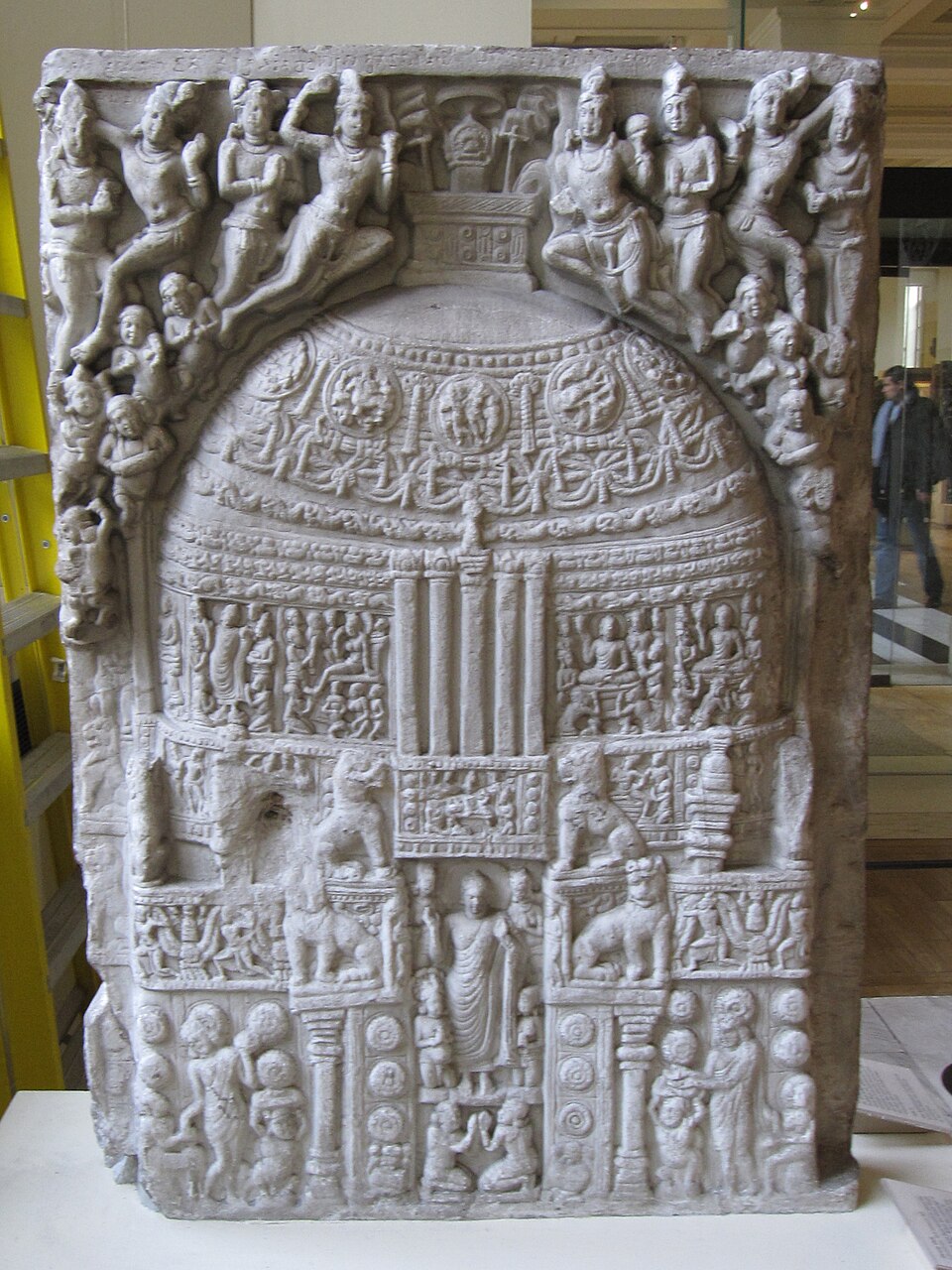
Dynamic Narrative Style: Unlike earlier northern schools (like Bharhut), the Amaravati reliefs are crowded, unified compositions filled with dramatic movement and overlapping figures to suggest depth.
White Limestone (“Marbles”): The use of greenish-white limestone allowed artisans to create intricate, highly polished carvings. Because of its marble-like finish, these panels are often referred to as the “Amaravati Marbles”.
Symbolic vs. Corporeal: A hallmark of Amaravati art is the simultaneous depiction of the Buddha aniconically (as an empty throne, footprints, or a pillar of fire) and in corporeal human form.
Universal Themes: The carvings vividly depict events from the Buddha’s life, Jataka tales (past life stories), and scenes from royal life. They are highly detailed with expressive faces and intricate drapery.
Architectural Layout Mahachaitya: At its peak, the stupa was the largest in India, featuring a massive hemispherical dome measuring approximately 50 meters in diameter.
Elaborate Railings: The vedika (railing) surrounding the stupa was adorned with heavily carved pillars, medallions, and coping stones.
Drum Slabs: The circular base of the dome was covered in sculptured casing slabs, which depicted the stupa itself alongside detailed scenes from the life of the Buddha.
Legacy and Current Locations: The Amaravati school profoundly influenced later South Indian art (such as the Pallava and Chola styles) and spread its aesthetic via maritime trade to Sri Lanka and Southeast Asia.
Following 19th-century excavations, these surviving masterpieces were largely dispersed.
Key pieces can be viewed today in prominent institutions:
The British Museum (London): Holds the renowned collection of “Elliot Marbles” and relief sculptures.
Government Museum (Chennai): Houses one of the finest and most extensive collections of Amaravati sculptures in India.
Archaeological Museum (Amaravati): Preserves local finds, artifacts, and fragments retrieved directly from the original site.
National Museum (New Delhi): Features several iconic panels and railing fragments in its early Buddhist art galleries